Source NFC Sticker for Asset Tracking, Payment, and Inventory
Find 30 NFC sticker options from Guangzhou suppliers featuring HF 13.56MHz chips and passive power modes. Buyers can compare specifications including reading distances up to 8cm, various shapes, and customization availability for identification and payment applications.
Key considerations
Products List




Comprehensive Sourcing Guide
Strategic Sourcing Guide for NFC Sticker Procurement
Understanding Technical Specifications and Chip Architecture
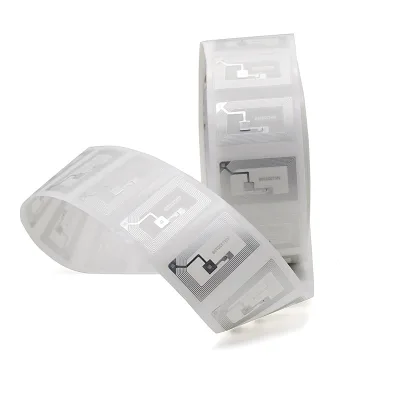
When sourcing NFC stickers, buyers must first distinguish between the physical form factor and the underlying electronic architecture. The market offers a diverse array of options, ranging from rigid smart cards to flexible labels and irregularly shaped stickers. A critical observation in the current supply landscape is the variation in chip types. While many products are categorized broadly as "Read/Write" chips, specific configurations such as the MT009 model indicate a passive power supply mode, which is standard for most proximity-based identification tasks. Conversely, other listings describe a "Passive Card" structure, emphasizing the lack of an internal battery and reliance on the reader's electromagnetic field for activation.
The operating frequency is a non-negotiable parameter for compatibility. The dominant standard in the observed inventory is High Frequency (HF) at 13.56MHz. This frequency supports a wide range of applications, from asset tracking to contactless payments. However, buyers must verify the specific reading distance capabilities, as these vary significantly by product design. Some units are engineered for short-range interactions with a reading distance of up to 8cm, while others, particularly those designed for industrial inventory tracking, may offer a broader operational range of 1-100cm. The data transmission mode is another technical differentiator; while some systems utilize parallel transmission, others may employ different protocols depending on the specific chip origin, such as NXP-derived components.
Physical dimensions and material composition also dictate the suitability of a sticker for a specific use case. The supply chain presents options ranging from compact 30x30mm rectangles to larger 80x50mm labels. Thickness is equally critical for applications requiring low-profile integration, with some products offering a slim profile of 0.3mm, while others provide a more robust 0.5-0.7mm thickness. Material choices are equally varied, with PVC and paper being the most common substrates. The choice between these materials often depends on the environmental conditions the sticker will face, as paper offers a different durability profile compared to the water-resistant properties often associated with PVC.
Compliance, Certification, and Regulatory Standards
Navigating the regulatory landscape is essential for international procurement, particularly when deploying NFC stickers in consumer-facing or industrial environments. The primary certification observed in the current market data is RoHS (Restriction of Hazardous Substances). This standard ensures that the electronic components and materials used in the sticker do not contain specific hazardous substances, such as lead or mercury, which is a mandatory requirement for selling electronics in many jurisdictions, including the European Union. Buyers should verify that the supplier provides valid RoHS documentation, noting that some listings may reference "Rohs" as a standard, which requires confirmation of the specific directive version being met.
Beyond material safety, the origin of the components plays a significant role in compliance and supply chain transparency. The chip origin is a critical data point; for instance, chips sourced from major manufacturers like NXP are often preferred for their reliability and widespread compatibility with global readers. However, the supply chain for these components can be complex, and buyers must ensure that the final product assembly adheres to the standards of the country of origin. In the observed data, products are listed as originating from Guangzhou, China, or broadly from China. While this provides a general geographic context, it does not guarantee specific manufacturing controls. Buyers should request detailed information regarding the manufacturing facility's compliance with international quality management systems, even if not explicitly listed in the initial product summary.
Temperature tolerance is another compliance-adjacent factor that affects the product's reliability in different environments. The observed operating temperature ranges vary, with some units rated for -40°C to +80°C, while others are specified for -20°C to +55°C. These ranges are not merely technical specifications but are critical for ensuring the sticker functions correctly in extreme climates, such as cold storage facilities or outdoor transportation assets. Storage temperature ratings, which can extend up to +100°C for some variants, further inform the logistics and warehousing requirements for the buyer. Failure to match the product's thermal rating with the intended application environment can lead to premature failure, rendering the certification of the chip itself irrelevant if the physical substrate degrades.
Cost Drivers and Pricing Dynamics
The pricing structure for NFC stickers is influenced by a complex interplay of factors, including chip complexity, customization levels, and order volume. The observed price range in the market spans from $0.01 to $2.50 USD, a wide variance that reflects the diversity of product specifications. At the lower end of this spectrum, buyers typically encounter basic, non-customized labels with standard memory capacities and simple shapes. These products often rely on high-volume manufacturing efficiencies and may have minimal customization options. Conversely, the higher price points are generally associated with specialized features, such as custom shapes, specific memory configurations (e.g., 144, 504, or 888 bytes), or the inclusion of proprietary chip technologies.
Minimum Order Quantity (MOQ) is a significant driver of unit cost. The market data indicates an MOQ range from 1 to 1000 units. For buyers testing the market or requiring small batches for prototyping, the ability to order as few as one unit is a crucial advantage, though the unit price will likely be at the higher end of the observed range. As order volumes increase, the per-unit cost typically decreases, but the total capital outlay rises. Buyers must balance the need for inventory against the cash flow implications of larger MOQs. Additionally, customization is a major cost variable. While some products offer "Other by Customized" packing or shape options, these bespoke requirements often incur setup fees or higher per-unit costs compared to standard off-the-shelf items.
Packing and logistics also contribute to the overall cost of ownership. Standard packing configurations, such as 100 pieces per bag or 100 pieces per box, are common. However, bulk packing options are available for large-scale deployments. The choice of packing method can impact shipping costs and handling efficiency. For instance, bulk packing may reduce packaging material costs but could increase the risk of damage during transit if not properly secured. Buyers should evaluate the total landed cost, including shipping, duties, and potential handling fees, rather than focusing solely on the base unit price. The variability in dimensions, from 13mm to 30mm, also affects the number of units that can be shipped per container, influencing the logistics cost per unit.
Typical Applications and Use Cases
NFC stickers serve a multitude of functions across various industries, driven by their ability to facilitate identification, payment, and information exchange. The primary application fields observed include transportation, market retail, and asset tracking. In the transportation sector, these stickers are often used for ticketing, access control, or fleet management. The passive nature of the cards allows for seamless interaction with readers without the need for battery replacement, making them ideal for high-turnover environments. The reading distance of up to 8cm or 3-5cm is sufficient for these applications, ensuring that users can interact with the system quickly and efficiently.
In the realm of asset tracking and inventory management, NFC stickers provide a robust solution for automatic production and inventory tracking systems. The ability to store data directly on the sticker allows for real-time updates on the status and location of assets. This is particularly valuable in manufacturing environments where tracking the lifecycle of a product or component is critical. The irregular shapes and various sizes available in the market allow for discreet placement on machinery, tools, or inventory bins, minimizing the risk of damage or interference with operations. The memory capacity of the stickers, ranging from 144 to 888 bytes, provides ample space for storing unique identifiers and transaction logs.
Payment and identification are also key application areas. The "Identification, Payment, Information" function set highlights the versatility of these stickers in consumer-facing applications. They can be used for loyalty programs, contactless payments, or as digital business cards. The high-frequency operation at 13.56MHz ensures compatibility with a vast array of existing NFC readers and smartphones. However, buyers must ensure that the specific sticker model supports the required security protocols for payment applications, as not all stickers are suitable for financial transactions. The choice between contact and non-contact read-write methods is also application-dependent; while most modern systems prefer non-contact methods for user convenience, some industrial applications may still utilize contact-type interfaces for enhanced security or reliability in harsh environments.
Supplier Evaluation and Quality Control
Evaluating suppliers for NFC sticker procurement requires a rigorous approach to quality control and capability assessment. Given the wide range of product types, from paper labels to PVC cards, buyers must verify the supplier's ability to maintain consistency across different material types. The presence of certifications like RoHS is a baseline requirement, but it should be accompanied by evidence of consistent manufacturing quality. Buyers should request sample batches to test the physical durability, adhesive strength, and electronic performance of the stickers under real-world conditions. This is particularly important for products intended for outdoor use or harsh industrial environments where temperature fluctuations and physical stress are common.
The supplier's ability to handle customization is another critical evaluation criterion. While many products offer "Available" customization, the extent of this capability varies. Some suppliers may only offer basic shape or size modifications, while others can provide fully bespoke solutions, including custom memory configurations and specialized packaging. Buyers should assess the supplier's lead times for custom orders and their flexibility in accommodating changes in design or specifications. The origin of the product, whether from Guangzhou or other regions in China, should be verified to ensure that the supplier has the necessary infrastructure to support large-scale production and export logistics.
Quality control processes should also extend to the testing of the electronic components. Buyers should inquire about the testing procedures used to verify the reading distance, data integrity, and memory capacity of the stickers. While specific test results are not always publicly available, a reputable supplier should be able to provide data sheets or quality reports that demonstrate the product's compliance with the stated specifications. The memory capacity, for instance, should be verified to ensure that the sticker can store the required amount of data without corruption. Additionally, the supplier's track record in the market, particularly in the transportation and asset tracking sectors, can provide insights into their reliability and the performance of their products in similar applications.
Long-Term Procurement and Supply Chain Resilience
Securing a long-term supply of NFC stickers requires a strategic approach to supply chain management and risk mitigation. The variability in product specifications and the dynamic nature of the technology landscape mean that buyers must plan for future compatibility and scalability. As the demand for NFC technology grows, the availability of specific chip types, such as those from NXP, may fluctuate. Buyers should establish relationships with suppliers who have a robust supply chain and the ability to source components reliably. This includes verifying the supplier's inventory management practices and their contingency plans for potential supply disruptions.
Customization and standardization are key considerations for long-term procurement. While custom solutions offer unique advantages, they can also introduce complexity into the supply chain. Buyers should evaluate whether a standardized product can meet their current and future needs, potentially reducing costs and simplifying logistics. However, if customization is essential, buyers should work with suppliers who have a proven track record of delivering consistent custom products. The packaging and storage requirements of the stickers should also be considered, as improper storage can lead to degradation of the adhesive or the electronic components.
Finally, buyers should consider the total cost of ownership over the lifecycle of the product. This includes not only the initial purchase price but also the costs associated with maintenance, replacement, and potential system upgrades. The operating temperature range and durability of the stickers are critical factors in determining their lifespan. Products with wider temperature tolerances and robust materials may have a higher initial cost but offer better long-term value by reducing the frequency of replacements. By carefully evaluating these factors, buyers can build a resilient supply chain that supports their operational needs while minimizing risks and costs.
FAQs
What is the operating frequency of these NFC stickers?
The operating frequency is High Frequency at 13.56MHz. This standard ensures compatibility with most readers for applications like asset tracking and NFC payments.
Can I customize the shape and packing of the stickers?
Customization is available for shape and packing configurations. Buyers can request specific dimensions like 30x30mm or 50x50mm and choose between bag or box packing.
What certifications do the NFC stickers hold?
The stickers hold RoHS certification to ensure compliance with hazardous substance restrictions. This standard applies to the materials and electronic components used in production.
How does the reading distance vary across different models?
Reading distances vary from up to 8cm to ranges of 1-100cm depending on the design. Some models support short-range interactions while others suit industrial inventory tracking.
What materials are used to manufacture these NFC stickers?
Materials include PVC and paper substrates. PVC offers durability while paper provides a different profile, with thicknesses ranging from 0.3mm to 0.7mm.
What is the minimum order quantity for these products?
The minimum order quantity ranges from 1 to 1000 units. Lower MOQs allow for prototyping, while higher volumes typically reduce the per-unit cost.
Which temperature ranges can the stickers withstand?
Operating temperatures range from -40°C to +80°C or -20°C to +55°C depending on the model. Storage temperatures can extend up to +100°C for safe warehousing.